

Quick answer
Frozen eggs and embryos are transported in validated cryogenic dry shippers that maintain ultra-low temperatures without external power, under a documented chain of custody that tracks every handoff from the originating fertility clinic to the receiving facility. The process requires a specialized medical courier, trained personnel, continuous temperature monitoring, and direct routing, not a general parcel delivery service.
For patients undergoing fertility treatment, a frozen egg or embryo is not just a specimen. It’s the culmination of medical intervention, financial investment, and deeply personal hope. When that specimen needs to move between a fertility clinic, a diagnostic lab, or a storage facility, the transportation process becomes just as critical as the science that created it.
This is where a specialized medical courier, not a general courier service, makes the difference. Frozen reproductive specimens require cryogenic handling, documented chain of custody, and a level of care that standard parcel delivery simply isn’t built for. Below, we break down why these transfers happen, who’s responsible for each step, and what safe transportation actually looks like in practice.
Why Frozen Eggs and Embryos Need to Be Transferred
Fertility clinics don’t operate in isolation. Patients switch providers, seek second opinions, or relocate. Clinics partner with off-site cryostorage facilities because on-site capacity is limited. Couples pursuing a surrogacy arrangement need specimens moved to a different clinic entirely. In every one of these situations, someone has to physically move a frozen egg or embryo from one secure location to another, safely, quickly, and without ever compromising its viability.
Common reasons a transfer takes place include:
- Clinic-to-clinic transfers, when a patient changes fertility providers or seeks treatment closer to home
- Storage facility relocations, when clinics shift long-term cryostorage to a dedicated facility
- Second-opinion or specialist referrals, where a specimen needs to reach a different reproductive endocrinologist
- Surrogacy and donor arrangements, which often require interstate or cross-provincial movement
- Research and academic partnerships, where consented specimens are transferred for study
Every one of these scenarios shares the same requirement: a courier who understands that this shipment cannot be delayed, mishandled, or left in the wrong hands at any point in the journey. This is precisely why IVF courier services have become a distinct category within medical logistics. General delivery drivers are not trained or equipped for it, and clinics increasingly seek out partners who are.
Who’s Involved in the Transfer Process
Moving a frozen embryo or egg safely isn’t a one-person job. It’s a coordinated effort between the fertility clinic, the receiving facility, and the courier team responsible for the physical transport.
The Originating Clinic
The originating clinic initiates the process. Embryologists prepare the specimen in an approved cryogenic shipper, typically a dry shipper charged with liquid nitrogen vapor and capable of maintaining ultra-low temperatures for days without external power. Clinic staff document the specimen’s identifiers, confirm patient consent, and coordinate pickup timing down to the hour.
The Medical Courier
The medical courier takes custody of the shipper at pickup and becomes responsible for everything from that point forward: verifying the specimen against documentation, monitoring the shipper’s condition throughout transit, and maintaining an unbroken record of who handled the specimen and when. A courier experienced in this kind of transport treats clinic delivery services as more than a drop-off. It’s a continuous chain of accountability from the moment they walk through the clinic’s door.
The Receiving Facility
The receiving facility confirms arrival, checks the shipper’s temperature log, and signs off on custody transfer. Only once every party has completed their portion of the documentation is the transfer considered complete.
Professional communication runs through the entire process. Reputable medical couriers coordinate directly with clinic staff on pickup windows, provide real-time status updates, and flag any delays immediately rather than leaving a clinic guessing about a shipment’s whereabouts. Clinics rightly expect nothing less when the specimen in transit represents a patient’s fertility journey.
Safe Transportation Practices in Action
Getting a frozen egg or embryo from point A to point B safely comes down to a few non-negotiable practices.
Cryogenic Packaging
The specimen travels inside a validated dry shipper designed to hold cryogenic temperatures for an extended period without an external power source. Couriers experienced in reproductive specimen transport know how to inspect a shipper before transit, confirm proper charging, and recognize warning signs of a compromised unit before it ever leaves the clinic.
Continuous Temperature Monitoring
Many of the same principles that govern cold chain logistics for vaccines and pharmaceuticals apply here: temperature data is monitored throughout the trip, and any deviation triggers an immediate response rather than being discovered after the fact. Temperature stability deserves particular attention, since a lapse, even a brief one, can compromise specimen viability permanently. The same discipline that governs temperature controlled delivery for pharmaceuticals and lab specimens applies with even less margin for error when eggs and embryos are involved: there is no reordering a replacement.
Documented Chain of Custody
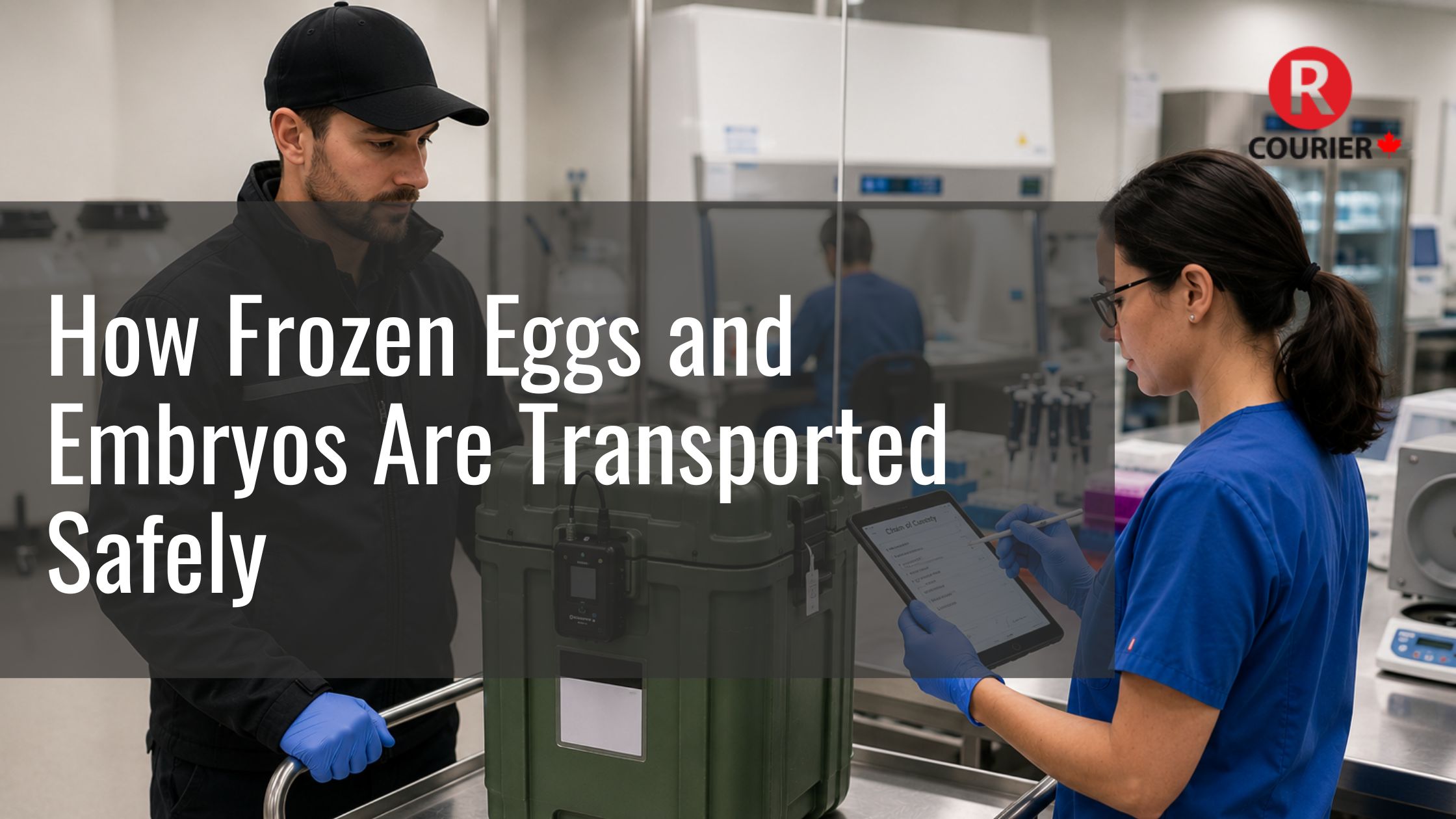
Every handoff is logged: time of pickup, condition at pickup, route taken, and time of delivery, with a signature confirming who received the specimen. This isn’t paperwork for its own sake. It protects the clinic, the courier, and most importantly, the patient, by creating an auditable record that the specimen was never left unattended or unaccounted for. This is the same standard of chain of custody R Courier applies to every regulated medical shipment, reproductive specimens included.
Trained, Dedicated Personnel
Drivers assigned to these transfers understand what they’re carrying and why urgency and discretion both matter. There’s no room for a specimen sitting in a vehicle while a driver makes an unrelated stop, and no room for confusion about handling instructions.
Regulatory Alignment
Depending on the jurisdiction and whether the transfer crosses provincial or international lines, additional documentation and permits may apply. A courier who understands compliance for medical couriers builds these requirements into the process from the start, rather than treating them as an afterthought.
Direct, Dedicated Routing
Unlike standard parcel delivery, which may route packages through multiple hubs and sorting facilities, reproductive specimen transport should move directly from pickup to delivery whenever possible, minimizing the number of hands the shipper passes through and the number of opportunities for something to go wrong.
Why the Right Courier Partner Matters
Fertility clinics don’t get a second chance to get this right. A frozen egg or embryo lost to a temperature excursion, a documentation gap, or a delayed handoff isn’t a logistics failure that can be quietly corrected. It’s a loss the patient carries. That’s why clinics increasingly look beyond general delivery services and toward couriers with dedicated experience in sensitive healthcare specimen transport.
R Courier has built its medical courier services around exactly this kind of accountability: documented chain of custody, trained personnel, and clear communication with the clinics that trust us with their most sensitive shipments. If your clinic is evaluating a courier partner for frozen egg or embryo transport, the questions worth asking are straightforward: how is custody documented, how is temperature monitored, and who is accountable at every step. A courier that can answer all three with confidence is one worth trusting with the shipments that matter most.
Frequently Asked Questions
How are frozen embryos transported between clinics?
Frozen embryos are transported inside validated dry shippers charged with liquid nitrogen vapor, which maintain cryogenic temperatures for days without external power. A medical courier documents chain of custody at every handoff, from pickup at the originating clinic to signed confirmation at the receiving facility.
Can frozen eggs and embryos be shipped by a regular courier?
No. Reproductive specimens require cryogenic packaging, temperature monitoring, and documented chain of custody that standard parcel delivery services aren’t trained or equipped to provide. Clinics rely on specialized medical couriers for this reason.
How long can a frozen embryo stay in a dry shipper during transport?
Properly charged dry shippers can maintain cryogenic temperatures for several days without external power, though clinics and couriers coordinate pickup and delivery windows to minimize transit time regardless of the shipper’s rated duration.
What happens if there’s a delay during embryo transport?
A qualified medical courier monitors shipper temperature continuously and flags any deviation immediately, allowing clinic staff to respond before specimen viability is affected. This is why direct routing and real-time communication are standard practice for reproductive specimen transport.
Who is responsible for a frozen embryo during transit?
The medical courier holds custody once the shipper leaves the originating clinic and is accountable for the specimen’s condition and location until it’s signed over to the receiving facility. Documented chain of custody establishes exactly who handled the specimen at every point along the way.


