

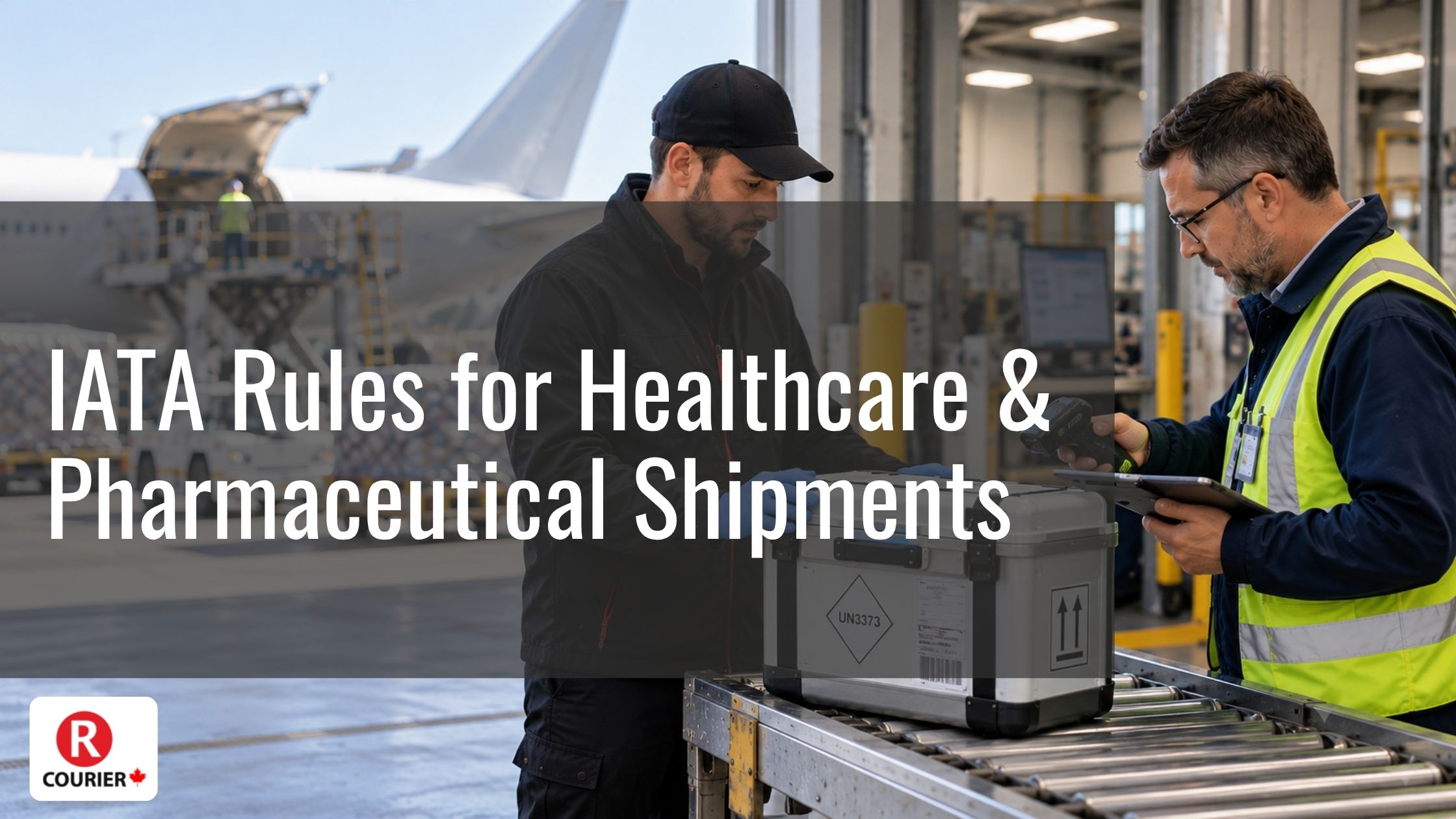
Quick answer: IATA regulations apply whenever healthcare shipments travel by air with dangerous or regulated goods, which includes infectious substances, biological specimens, and dry ice. Staying compliant means classifying the shipment (Category A, Category B, or exempt), using UN-specification triple packaging, matching labels and documentation to that classification, and managing temperature control and patient privacy alongside the transport rules.
A vial of patient blood samples, a box of temperature-sensitive vaccines, a shipment of diagnostic reagents: none of these can simply be dropped in a courier bag and sent to the airport. The moment healthcare materials travel by air, they fall under a dense web of international air transport rules, and the healthcare providers shipping them are the ones ultimately responsible for getting it right.
Understanding when IATA regulations apply, and what they actually require, is not optional knowledge for hospitals, labs, and clinics that rely on air freight. It is the difference between a shipment that clears customs without incident and one that gets delayed, rejected, or flagged for a compliance review.
What Are IATA Regulations, and Why Do They Apply to Medical Cargo?
IATA, the International Air Transport Association, sets the global standard for how dangerous and regulated goods move through the air cargo system. Its Dangerous Goods Regulations manual is the rulebook that airlines, freight forwarders, and shippers use worldwide, and it is far more detailed than most healthcare staff expect. Anyone booking a shipment that includes biological material, pharmaceuticals, or diagnostic specimens needs a working understanding of iata regulations before that package ever reaches the tarmac.
The reason medical cargo gets swept into this framework is straightforward: many of the materials healthcare providers ship qualify as dangerous goods under the same classification system used for chemicals, batteries, and other hazardous freight. Infectious substances, biological specimens, and even the dry ice used to keep vaccines cold are all regulated categories. A courier who understands iata shipping regulations knows how to route these materials correctly and avoid the common errors that trigger delays.
When Do IATA Shipping Regulations Apply to Your Shipments?
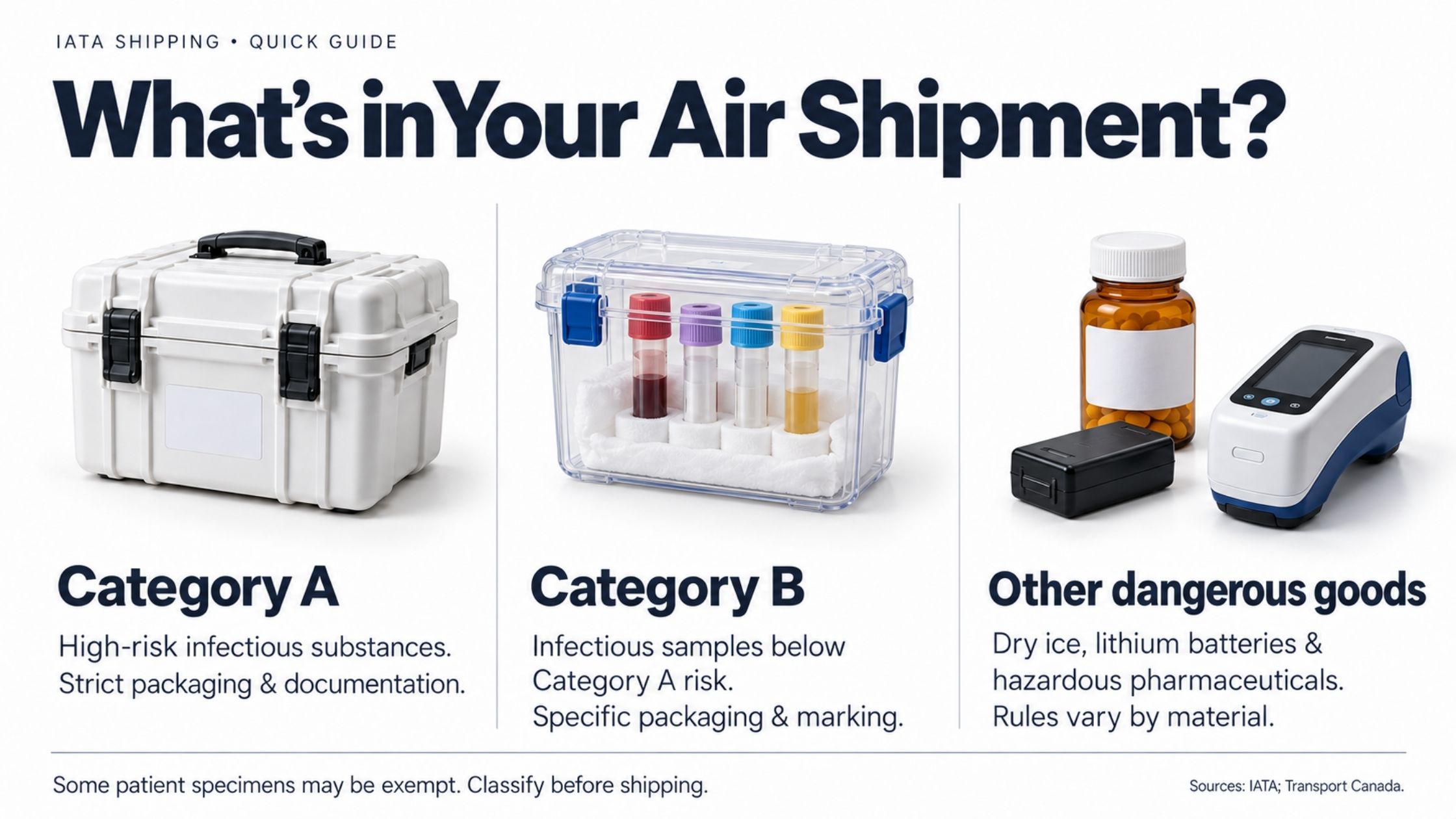
Not every healthcare shipment triggers the same level of scrutiny, and knowing where a given package falls matters. IATA divides biological substances into two main categories. Category A covers infectious substances capable of causing permanent disability or death in otherwise healthy humans or animals, and it comes with the strictest packaging and documentation requirements in the system. Category B covers the far more common case: diagnostic specimens, clinical samples, and other biological material that does not meet the Category A threshold but still requires regulated handling.
| Type | What it covers | How it is handled |
|---|---|---|
| Category A | Infectious substances capable of causing permanent disability or death in otherwise healthy humans or animals | Strictest packaging and documentation requirements in the system |
| Category B | Diagnostic specimens, clinical samples, and other biological material that does not meet the Category A threshold | Still requires regulated handling |
| Other dangerous goods | Dry ice used as a refrigerant, lithium batteries in portable diagnostic equipment, and certain pharmaceutical compounds with flammable or corrosive properties | Intersect with other dangerous goods classes, which is why industry guidance is needed |
Beyond biological substances, providers frequently ship materials that intersect with other dangerous goods classes: dry ice used as a refrigerant, lithium batteries powering portable diagnostic equipment, and certain pharmaceutical compounds with flammable or corrosive properties. The work that industry bodies do through Healthcare Cargo Working Groups and Guidance Material exists precisely because these overlapping categories create confusion, and staying current with that guidance is part of what separates a compliant shipment from a problematic one.
The World Health Organization’s own guidance on the transport of infectious substances lays out similar classification logic and is a useful reference point for providers trying to understand how a specimen gets categorized before it ever reaches a courier’s hands.
What Packaging, Labelling, and Documentation Are Required?
This is where iata rules for medical cargo get specific, and where most compliance failures actually happen. Category A and B biological substances require what is known as the triple packaging system: a primary receptacle holding the specimen, secondary packaging that contains it in case of leakage, and rigid outer packaging built to withstand the drops and pressure changes of air transport. Each layer has its own specification, and substituting an ordinary shipping box for UN-specification packaging is one of the fastest ways to have a shipment refused at the counter.
| Packaging layer | Purpose |
|---|---|
| Primary receptacle | Holds the specimen |
| Secondary packaging | Contains the specimen in case of leakage |
| Rigid outer packaging | Withstands the drops and pressure changes of air transport |
Labelling has to match the classification exactly. Infectious substance labels, biohazard markings, and orientation arrows all need to appear correctly and in the right combination, because a mislabeled package can be interpreted as either under-declared or over-declared, both of which cause problems. Documentation follows the same logic. A Shipper’s Declaration for Dangerous Goods, when required, has to be filled out precisely, listing the proper shipping name, UN number, and packing group for the substance being sent. Errors here are not cosmetic: airlines and ground handlers are trained to reject paperwork that does not line up with what is physically inside the box, and a rejected shipment at the airport means starting the process over, often with a patient sample or treatment timeline on the clock.
There is a second layer to the documentation question that healthcare providers cannot treat as separate from the transport rules. Any patient-identifying information attached to a specimen, a requisition form, a lab order, a name tied to a sample ID, brings HIPAA compliance into the picture alongside the air regulations themselves. A courier handling that paperwork needs protocols for both problems at once: packaging that satisfies IATA’s dangerous goods standards, and handling that satisfies the privacy obligations healthcare providers are bound by regardless of how the shipment travels. Getting both right at once is a specific skill set, not a generic shipping task, and it is where a lot of general freight and courier services fall short even when their dangerous goods training is otherwise solid.
How Is Temperature-Sensitive Medical Cargo Handled?
A large share of healthcare air cargo is also temperature-sensitive, which layers cold chain management on top of the dangerous goods framework. Vaccines, certain diagnostic reagents, and some pharmaceuticals have narrow temperature windows that cannot be interrupted without compromising the product, and Temperature Control Regulations and Guidelines exist specifically because a package that is compliant on paper but arrives thawed or overheated has still failed its purpose.
This is where Time & Temperature-Sensitive Handling Procedures come into play: pre-cooling containers before loading, calculating the right amount of dry ice for a given transit time, and building in monitoring so a provider knows the moment something drifts outside range rather than finding out on delivery. It is a level of operational precision that goes beyond simply checking a regulatory box, and it is exactly the kind of detail R Courier’s team is built around, having worked through how we safely transport medical specimens across a wide range of temperature and timing constraints.
What Should You Look for in a Compliant Medical Courier Partner?
Given how much can go wrong between a hospital loading dock and an aircraft cargo hold, the choice of courier partner carries real weight. A provider evaluating options should be looking for a few specific things: documented training in dangerous goods handling, a clear chain of custody from pickup to delivery, and a track record with the regulations and standards that govern this category of shipment specifically, not general freight rules applied loosely to medical cargo.
Medical courier compliance also means the courier understands that a broken chain of custody is not just an operational failure. It can invalidate a diagnostic result, delay a treatment decision, or create a documentation gap that causes problems well after the shipment has arrived. A courier that treats chain of custody as a formality rather than a discipline is the wrong partner for anything regulated.
For providers coordinating shipments that cross provincial or national borders, national and international logistics experience matters just as much as local reliability. The rules do not stay static once a shipment crosses a border, and a courier without that broader operational background can miss requirements that only apply once a package leaves domestic airspace: different customs expectations, different documentation formats accepted by different carriers, and different timelines for how quickly a temperature-sensitive shipment needs to clear each leg of the journey.
It is worth asking a prospective courier partner directly how they train staff on these rules, how often that training is refreshed as regulations change, and what their process looks like when a shipment gets flagged mid-transit. R Courier has built its healthcare logistics work around answering exactly those questions, treating compliance as a standing operational practice rather than something addressed only when a problem comes up.
What Steps Keep Air-Shipped Medical Cargo Compliant?
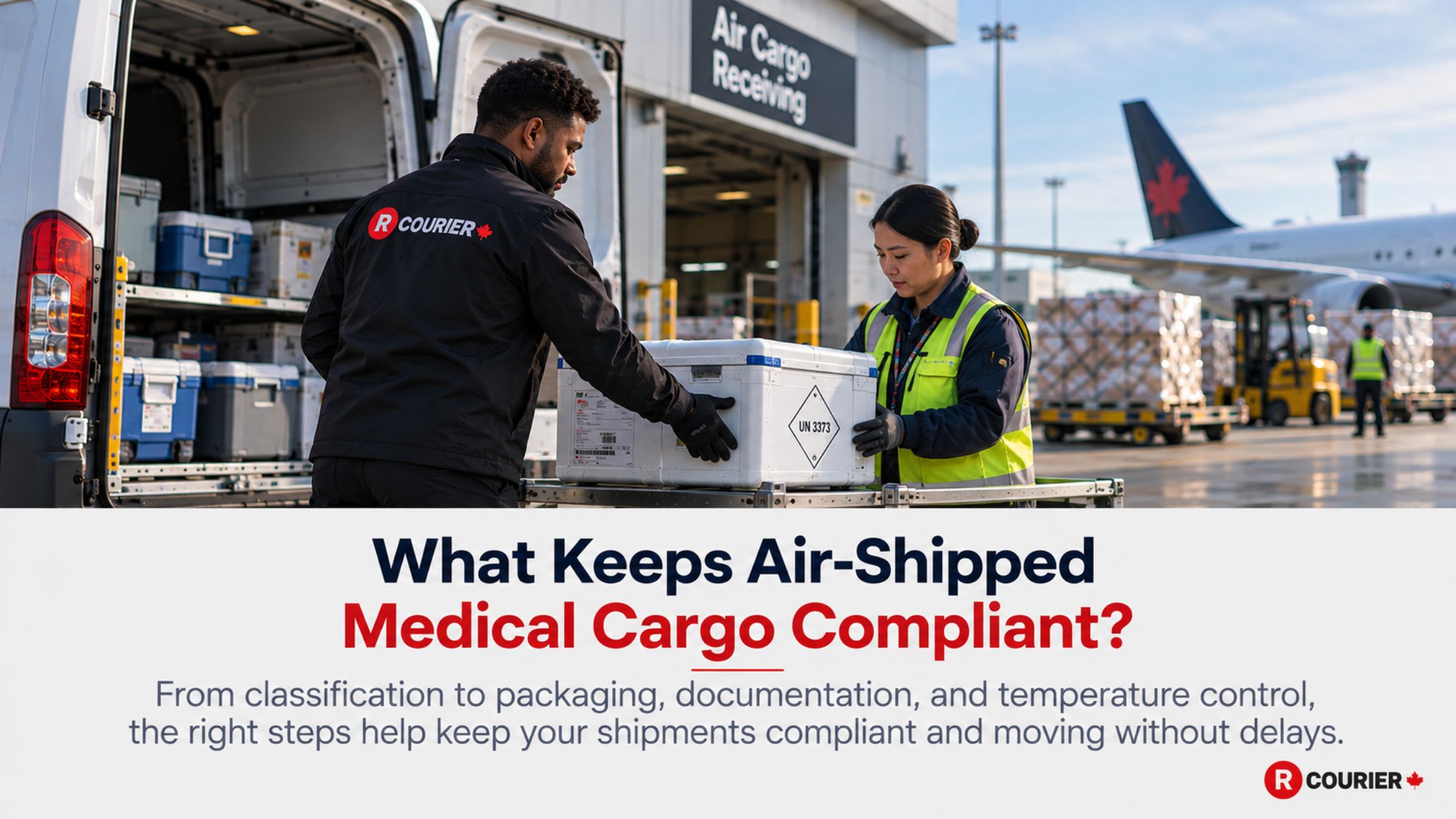
A few habits go a long way toward keeping air-shipped medical cargo compliant:
- Confirm the classification (Category A, Category B, or exempt) before packaging begins, not after.
- Use UN-specification triple packaging for any biological substance, without exception.
- Match labels and documentation to the exact classification, including any Shipper’s Declaration requirements.
- Build in temperature monitoring for anything cold-chain dependent, with a clear protocol for what happens if a reading drifts.
- Work with a courier partner who can speak fluently to both the transport regulations and the patient privacy requirements running alongside them.
None of this is a one-time checklist item. Regulations get updated, packaging standards evolve, and the guidance issued through industry working groups shifts as new risks are identified. The providers who stay ahead of it are the ones who treat compliance as an ongoing relationship with a courier partner, not a form filled out once and forgotten. Air-shipped medical cargo carries real consequences when it goes wrong: a delayed diagnosis, a spoiled vaccine batch, a specimen that has to be redrawn. Getting the regulatory side right the first time is worth the extra attention it takes.
Frequently Asked Questions About IATA Regulations for Medical Cargo
What are IATA regulations for medical cargo?
IATA’s Dangerous Goods Regulations are the rulebook that airlines, freight forwarders, and shippers use worldwide for dangerous and regulated goods. Many healthcare materials, including infectious substances, biological specimens, and the dry ice used to keep vaccines cold, fall into regulated categories, which brings medical shipments by air under this framework.
What is the difference between Category A and Category B?
Category A covers infectious substances capable of causing permanent disability or death in otherwise healthy humans or animals, and it carries the strictest packaging and documentation requirements. Category B covers diagnostic specimens, clinical samples, and other biological material that does not meet the Category A threshold but still requires regulated handling.
What is triple packaging?
Triple packaging is the system required for Category A and B biological substances: a primary receptacle holding the specimen, secondary packaging that contains it in case of leakage, and rigid outer packaging built to withstand the drops and pressure changes of air transport. Each layer has its own specification, and an ordinary shipping box is not a substitute for UN-specification packaging.
Is dry ice regulated for air shipping?
Yes. Dry ice used to keep vaccines and other temperature-sensitive materials cold is one of the regulated categories, which is why cold-chain shipments have to be planned around both temperature requirements and the dangerous goods rules.
What documentation do regulated medical shipments need?
When required, a Shipper’s Declaration for Dangerous Goods must be filled out precisely, listing the proper shipping name, UN number, and packing group for the substance. Airlines and ground handlers are trained to reject paperwork that does not match what is physically in the box. Patient-identifying information on requisition forms or lab orders also brings HIPAA compliance into the picture.
What should you look for in a medical courier for air shipments?
Look for documented training in dangerous goods handling, a clear chain of custody from pickup to delivery, and a track record with the regulations that govern medical shipments specifically. It is also worth asking how staff are trained, how often that training is refreshed, and what happens when a shipment is flagged mid-transit.


