IATA Regulations for Healthcare & Pharmaceutical Cargo: What Healthcare Providers Need to Know
A guide to when international air transport rules apply to medical shipments, and how to stay compliant from packaging through delivery.

A guide to when international air transport rules apply to medical shipments, and how to stay compliant from packaging through delivery.
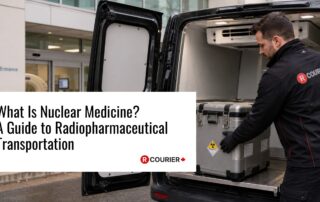
Quick answer Nuclear medicine is a branch of medical imaging and treatment that uses small amounts of radioactive material, called radiopharmaceuticals, to diagnose and treat disease at the molecular level. These substances are administered to patients and tracked using specialized cameras like PET and SPECT scanners, or used directly as targeted treatment. Because
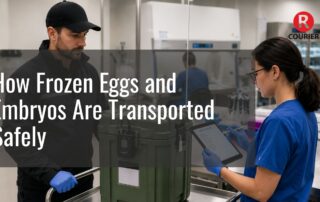
Quick answer Frozen eggs and embryos are transported in validated cryogenic dry shippers that maintain ultra-low temperatures without external power, under a documented chain of custody that tracks every handoff from the originating fertility clinic to the receiving facility. The process requires a specialized medical courier, trained personnel, continuous temperature monitoring, and direct
Key Takeaways Vaccines require an unbroken cold chain from manufacturer to patient, with most routine vaccines maintained between 2°C and 8°C and some mRNA formulations requiring ultra-low temperatures of minus 70°C or colder Temperature excursions cannot be reversed or tested after the fact — if the cold chain breaks, the product must be treated
Not every courier company is equipped to move medical cargo. A general logistics provider can deliver a package on time and still fail completely when that package contains a blood specimen, a controlled substance, or temperature-sensitive medication that determines a patient's treatment plan. Compliance is what separates a medical courier company from a general
Most people think the important part happens in the exam room. The chair reclines, the sleeve rolls up, a few vials are filled, a cotton ball appears, and everyone moves on with their day. It feels like the process ends there. It does not. That blood sample has just entered one of the
Published: April 2026 | By the R Courier Team When most people think of a medical courier, they picture lab specimens moving between clinics and diagnostic centres. That image is accurate — but it is only part of the story. Across Canada, businesses in industries far beyond healthcare are discovering that a specialized, reliable courier
Businesses love to talk about digital speed. Cloud platforms promise instant access. Automation reduces human delays. Communication tools connect teams across cities in seconds. On the surface, modern business looks almost frictionless. But behind every fast digital system is something far less glamorous: physical infrastructure. Servers sit in buildings. Equipment
Speed dominates courier conversations. Same-day delivery. Rush service. Immediate pickup. Faster than fast. But for businesses operating across Canada, speed alone rarely solves the real problem. Coverage does. A courier can be fast in one city and still fail the moment a shipment crosses provincial lines. In regulated industries like healthcare, legal services, and government-adjacent
When your business needs something delivered fast, every minute counts. Whether it is a contract that must be filed today, medication a patient is waiting on or a part that keeps your operations running, delays are more than an inconvenience. They cost time, money and trust. That is why so many organizations in
1. Enter your login and password details.
Enter Account #
Enter Web ID
Password

2. Access ETA Board

3. ETA Board can be customized to match your brand

4. Track deliveries through the routing board

5. Reports: click on reports on your ETA board and you can select date range and review all your previous orders.